Here’s the famous Filipino dish that serve by the Filipino Mom’s.
- Humba
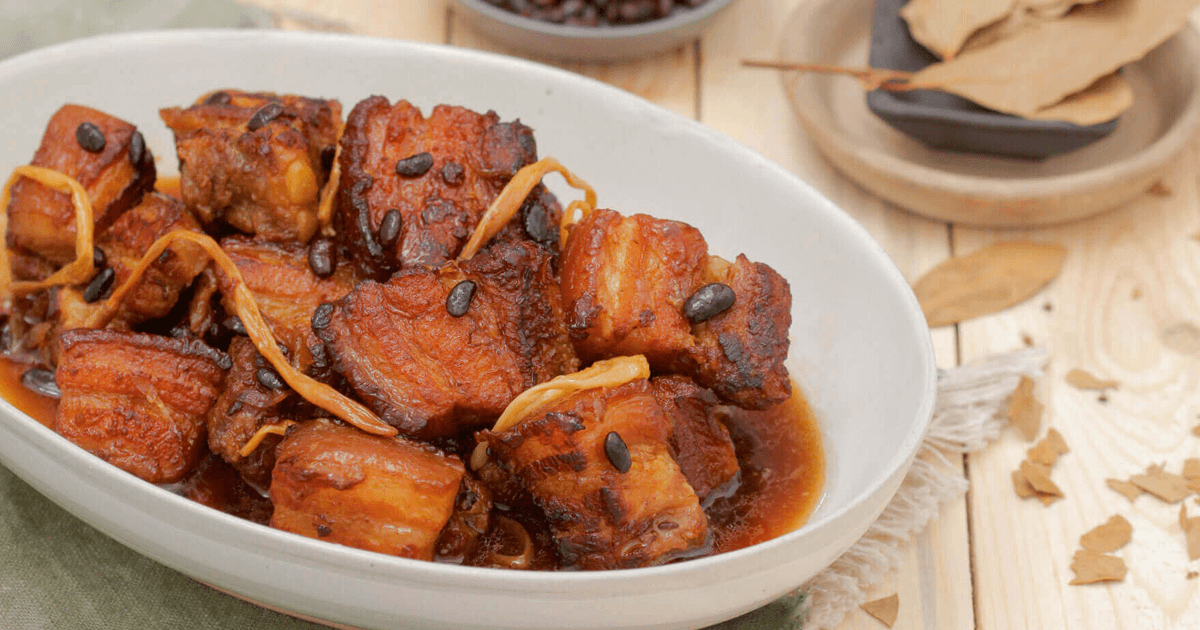
HUMBA. This word is from the Chinese hong baq (meaning: ‘saucy meat’). Humba is a highly spiced dish of pork or chicken from the Visayas region of the Philippines. A soft-drink like Coca-Cola or Sprite is now often used as a substitute for sugar during the pork braising step.
Humba is very similar to adobo, but also includes banana blossoms and tausi (fermented black bean paste). This gives humba a sweeter taste than adobo and results in an amazing spicy/salty/sweet flavor. Whereas you can find the adobo flavor applied to all types of meat and vegetable dishes, humba is almost always made with pork.
You’ll encounter humba in the southern islands of the Philippines and it’s even sometimes referred to as Cebu’s version of adobo. Make sure you try both these famous Filipino dishes and see which you prefer!
2. Adobo
Adobo is a cooking technique, therefore it’s also the name of a dish. As mentioned above, it’s a traditional Philippine dish, usually Adobo Chicken or Adobo Pork. Adobo is prepared using pantry basics, like white vinegar, soy sauce, garlic, peppercorns, and bay leaves, to create a marinade
Adobo is often called the national dish of the Philippines and it’s certainly the most famous Filipino dish. The flavor is created using vinegar, soy sauce, garlic, bay leaves, and black pepper. Also chili peppers are sometimes added to give it a little spice.
The most typical adobo dishes are chicken and pork but you’ll find every restaurant in the Philippines has their own take. The meat can either be cooked into a stew or marinated in the adobo sauce and then pan fried.
3. Sisig
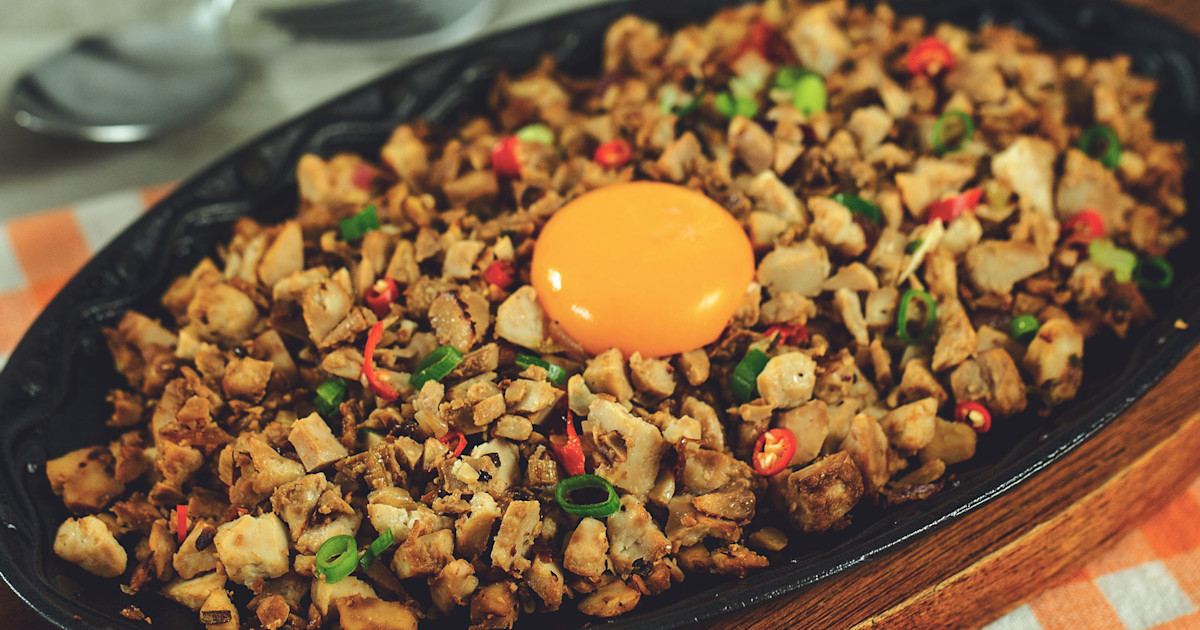
You’ll know someone has ordered sisig when you hear the sizzling and see the steam rising off of the cast-iron skillet. It’s like Filipino fajitas and is an extremely popular dish in the Philippines!
Pork sisig is most common and it consists of chopped up pig ears, jowls and liver, onion, and chili peppers delivered on a sizzling hot skillet with a raw egg on top. You’ll need to mix in the egg to cook it before the skillet cools down. It usually comes with a couple calamansi halves so you can squeeze the juice over the top.
The dish’s name comes from “sisigan,” an old Tagalog word which means “to make it sour.” Its existence was first recorded in a Kapampangan dictionary back in 1732 by Diego Bergaño, a Spanish missionary who served as the parish priest for Mexico,
4. Sinigang
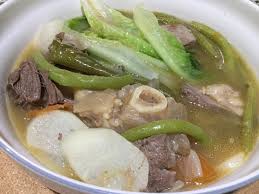
Sinigang is a sour soup that is typically made with pork and tamarind though sometimes other sour fruits like guava, green mango, or calamansi are used instead. Tomatoes, garlic, onion, and various other vegetables complete the stew.
It’s a delicious Filipino comfort food and makes for a hearty hangover breakfast if you had a few to many Pilsens the night before.
Cooling in hot climes, soothing for those under the weather, low in calories but high in healing for the sick, tastily filling for the healthy, greatly varied as to ingredients, quickly cooked and easily increased, suitable for breakfast, lunch, dinner and in between, sinigang must be surely the Filipino dish for all …
So why is Sinigang a hit among Filipinos? With its sour soup, sinigang is marked as Filipino comfort food. It rouses the senses because of the sourness and slight spice. Also, ingesting the long peppers can make the body sweat, which helps it to cool especially during a humid day.
5. Kare-Kare
Kare–kare is a Philippine stew complimented with a thick savory peanut sauce. It is made from a base of stewed oxtail (sometimes this is the only meat used), pork hocks, calves feet, pig feet, beef stew meat, and occasionally offal or tripe.
Kare-kare is a thick stew made from oxtail, vegetables, and a peanut sauce. It reminded us a bit of massaman curry from Thailand which makes sense as the word ‘kare’ is derived from the Filipino word for curry. Supposedly the best kare-kare comes from Pampanga which is just north of Manila, but you’ll find this dish served all over the Philippines.
The Kare Kare Toasted Peanut sauce is rich, nutty, and slightly tangy with the mildest touch of heat. … I served the rich nutty stew over rice and topped it with a sprinkle of salty, dry-roasted peanuts. Hearty, healthy perfection. The veggies in this dish can be completely customized to your liking.
-Mj Caga-anan -Member of Group4gwapo
 "WAY KUWARTA FOOD BLOG"